Harvest Health

Harvest Health

Monday, 9 February 2015

New Year's Word

I know New Year's Eve was over a month ago now.  I also know that New year's resolutions have been done to death over the last month.  During January, many newspapers, magazines and blogs seemed to talk incessantly about making and keeping resolutions.  I got quite tired of it.  I also got quite cynical.  I'd like another round of resolution articles in June or July, just to check in and see how people are going with the resolutions they proudly proclaimed, full of enthusiasm in January. I wonder if many could even remember them!


I've been reading, however, about an alternative to resolutions, and that is a New Year's Word.  A word  for the year sets your intention for who you want to be, or what you want to create more of in your life.  It's a word for you to focus on and to help guide you when making decisions.  I love the simplicity of this notion.  If the word is chosen well it can influence your day to day life and your bigger picture decision making.

It took a little while for me to find my word, but once I had it there was no doubting it was the right one.  My word is mindful.  I know mindfulness has been a bit of a buzzword lately and there are mindfulness workshops aplenty.  I'm keeping it simple at this stage.  For me it means a real need to slow down and focus on just one thing.  I want my word this year to help me not live in such a constant state of mental distraction.  As a small example, I would like to read and focus on one book at a time instead of several, complete one task on the computer at a time instead of having several windows open.


I'm well aware that mindfulness is not a new concept; indeed it's an ancient practice that has been written about over the centuries by many learned and wise people.  There is much to know and learn, but I'm focussing on taking small steps. I'm hopeful that remaining aware of my word for the year will keep me focussed and present in my life.

Thursday, 11 September 2014

Green Smoothies……The Good and the Bad.

The green smoothie phenomenon has been sweeping the world for a few years now, and it looks like it’s here to stay.  As with most health fads, it has its good and bad points.

The Good:

  • v  Drinking regular green smoothies can dramatically increase your vegetable intake over a day, and over the week.
  • v  Portable - a good option for ‘eating’ on the run. A quick, nutritious snack
  • v  Often kids will happily have vegetables in a smoothie that they wouldn’t normally eat
  • v  Contains the whole vegetable, including the fibre, unlike juices where the fibre is left behind.

The Bad:


v  Most of the greens used in green smoothies are traditionally eaten cooked.  Some contain chemicals called oxalates that are neutralised when cooked, but not when eaten raw.  Oxalates can block mineral absorption and potentially cause kidney stones.
v  There is no chewing involved.  Chewing is the first part of digestion.  Although a blender will do some of the work for you by making the food into tiny pieces, the saliva involved with chewing has enzymes which begin the process of digestion.
v  They can cause digestive disturbances in some people.  There is no point in having a green smoothie if it gives you diarrhoea.
v  They are often made with a lot more fruit than veg, meaning they are sweet, and will cause a spike in blood sugar.

So, as with many health fads, green smoothies can be good, but not for all people, and not all of the time.  Spring, however is the ideal time to increase your intake of greens and give the occasional green smoothie a go.

Green Smoothie Recipes
There is no exact recipe, although you will find many on the internet.  Experiment with different greens, veg and fruit to find combinations you enjoy.  Ideally, make sure that the amount of veg is greater than the amount of fruit.  Greens to try include:
  • spinach,
  • silverbeet,
  • kale, 
  • beetroot greens, 
  • parsley, 
  • celery and 
  • cucumber.  
If adventurous, you can try greens from the garden such as dandelion, mallow or purslane!

The following is a basic green smoothie recipe:
1 orange, peeled
1/2 banana
3 kale leaves, stripped off stem
1 tbl chia seeds (optional)

Or for a more tropical flavour, try:
1/2 cup pineapple
1 stick of celery and/or 1/2 cucumber
1/2 apple
twig of mint
2 - 3 big handfuls of leafy green veg


Add approx. ¾ cup of water depending on desired consistency.  Put ingredients into a powerful blender and blend until smooth.  Enjoy a glassful, and the remainder can be stored in a glass jar in the fridge for a day.

Monday, 8 September 2014

A thousand steps. In a day, and over a lifetime

More beautiful Spring weather over this past weekend motivated my husband and I to take the family outdoors to celebrate Father's Day.  We went to a well known walk called the 1000 Steps Kokoda Memorial Walk in the Dandenong Ranges National Park on the outskirts of Melbourne.  It is a memorial to the soldiers who fought and defended the Kokoda trail in Papua New Guinea in the second  World War.  So, it is narrow, steep and challenging.


My children are 10 and 13, and I have to admit they were not willing participants in this activity that they were dragged into by their parents!  My 13 year old son in particular was most challenged by the steepness of the steps.  It gave me cause to reflect, as I waited for him and tried to encourage him.  Indeed, I think the steps are designed to make you reflective.

I reflected on the difficulty of the challenge and how it can be a metaphor for the challenge of life and for our health.  I likened each step we took on the path to the steps we take during our life.  We find some steps really difficult to take, and others require less effort.  Sometimes we need to rest before taking the next step, and other times we can keep going with less effort.  Meanwhile we are surrounded by other people on their own journeys.  Some finding it a greater struggle than us, and others seemingly taking effortless strides to pass us.  (If you do this walk, you will see people of all different abilities on it).

So wherever we are in our life, a large part of it is due to steps we have taken to reach there.  Each day we are faced with decisions on which steps to take.  Steps that will lead to greater health and vitality, or steps that take us further away from good health.  It's a daily challenge for us, wherever we are on our health journey.

Saturday, 6 September 2014

Spring…….finally

Two weeks ago I sighted my first cherry blossom, and the effect on my mood was immediate.  It made me feel very happy as it heralded the end of what has felt like a long and particularly cold winter here in Melbourne.


This year there seemed to be greater number of days that have been particularly cold, especially the early morning and evening.  The first signs of spring along with some blue skies and an increase in the temperature seems to have had an effect on the whole of the city and those of us that live here.

Spring brings an upsurge in nature's energy.  We are surrounded by visual evidence of this rising of energy in the appearance of leaves and unfolding of flowers.   As human beings we cannot help but be affected by this energy.  I don't know whether it is just that I am feeling better with the appearance of the sun, but it seems as though everyone is a little bit happier, a little bit more relaxed.  It as though we have been holding our breath, and can now finally breathe out.

Winter is a time of contraction, where we withdraw and are more inclined to stay at home.  This is not necessarily a bad thing as we hopefully use this time to pause and reflect.  The arrival of Spring means we breathe deeper, exhale, straighten our shoulders and feel a sense of expansion.


Embrace the change of seasons.  Become aware of the effect of different seasons on your mind and body.  At the very least, take a few moments to relax your shoulders, open your arms and breathe deeply, welcoming the energy of Spring.

Friday, 25 April 2014

Don't forget the Basics

Lately, in my work with some lovely new clients, I've been reminded how easy it is to overlook the basics of good health.  By this, I mean the simple things that we are in control of for ourselves, but due to their simple nature they are often overlooked or not given any importance.  Here are my top two basics of good health:

Sleep
Sleep is the cornerstone of good health.  It doesn't matter how good your diet is, or how many times a week you're exercising, if you're not getting enough sleep you will not feel as vital, or energetic as you could.  Many people get caught in front of the TV, or on social media several nights a week, and their bed time gradually creeps later and later.

A viscious cycle is created when we induce a chronic lack of sleep.  In order to feel awake each morning (and possibly each afternoon),we reach for caffeine and sugar.  These two substances can wreak havoc on our health and create their own set of health problems.  Going to bed earlier and having a restful night's sleep can mean we have less of a dependence on stimulating substances, and can keep them as an occasional indulgence.

Breakfast
Perhaps if you have not had a good night's sleep, you sleep in and don't allow enough time for breakfast in the morning.  Or perhaps you are so busy taking care of your family's needs in the morning that you neglect your own.  We have all heard the mantra that breakfast is the most important meal of the day. Well, it's true!  If you skip breakfast, or just have a cup of coffee, you are much more likely to eat unhealthy foods at 10 or 11 o'clock.  This then becomes its own negative habit or pattern.

It is important for your health to create a morning routine that enables you to eat a healthy breakfast.  Be careful not to overdose on sugar by having fruit juice and sugar-laced cereals.  It is easy to create a balanced breakfast by eating simple things such as egg and/or avocado on toast, porridge, or yoghurt, fruit and nuts.  If you are interested in some more healthy breakfast ideas, I have written extensively here, hereherehere and here.  (Mmmm...there is definitely a recurring theme on this blog!  Perhaps it's time to move onto other topics, such as lunch?)  If you really can't face eating breakfast, try a smoothie or at least a couple of pieces of fruit, so your body is fuelled before you leave the house.

So there you have it, two simple basics of good health.  Get these two right, and you are well on your way to enjoying good health.

Friday, 28 February 2014

Chia Pudding in a jar

There has been a bit of a buzz in health circles lately on the concept of creating meals in a jar.  The ones that have taken my interest are 'salad in a jar' and chia puddings in a jar.  I'm not sure who came up with the original idea, so unfortunately I can't credit or link to them here.  The basic premise is the layering of healthy ingredients that can then be either eaten straight from the jar, or tipped into a bowl before eating.

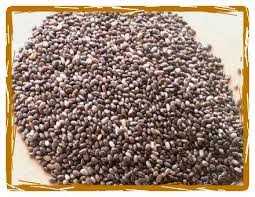
Firstly, a word or two about chia seeds.  Chia seeds are right up there with quinoa in terms of a new 'superfood' that has been embraced by the wider community.  Initially when the craze began I was skeptical that chia seeds were just a fad, and stuck to my more humble flaxseed (or linseed).  I now think they both have their place as they have different properties.  One of the beneficial properties of chia seeds as you will see in this post, is their ability to swell in size until gel-like.  The beauty of this is that with very minimal effort and absolutely no cooking you can create a pudding.

Chia goodness (or why they're worth eating):
  • High in fibre
  • Full of protein
  • High in omega 3s
  • Contain potassium and calcium
  • Gluten free
When soaked in a liquid the seeds swell and become gel like.  Make sure to drink plenty of water when you eat them as they are so full of fibre.

How to use them:
  • You can sprinkle them on breakfast cereal or salads.
  • You can add them to a smoothie to make it more filling
  • You can mix them with warm milk to make a porridge
  • You can mix them with cold milk to make either a cold porridge or a pudding. 
The great thing with chia seeds is that you don’t have to cook them, you just mix them with a liquid.


Chia Pudding in a Jar

Chia pudding can be eaten for breakfast, dessert, or as a snack.  It packs a powerful nutritional punch and is extremely easy to make.  This recipe fills a 250ml jar or glass.

  • 1tbl chia seeds
  • ¼ cup milk of your choice (cow, almond, oat, coconut)
  • Splash of maple syrup (optional)
  • ½ cup mixed berries (or other seasonal fruit)
  • ½ cup chopped nuts such as walnuts and/or pecans
  • ¼ cup yoghurt

  1. In a jar combine the chia seeds, milk and maple syrup if using and stir well.  The pudding will set in 5-10 minutes, or can be put in the fridge overnight. You will need to stir a few times until it's set.
  2. Place your berries (or other fruit) over the chia pudding.
  3. Layer the nuts over the berries.  Dry roasting the nuts beforehand adds another level of flavor
  4. Finish the pudding with a layer of natural yoghurt.
  5. When ready to eat mix it all together and ENJOY!
The variations on the above recipe are endless.  Use this as a guide only and experiment with different combinations of fruit and nuts.

Tuesday, 9 July 2013

Weekend pancakes

Every weekend for the last few years, my family has made pancakes for Sunday breakfast.  I've always tried to make them as healthy as possible, while also trying to make them enjoyable for my children.  While most things can be made to taste good with maple syrup or jam, I have to admit that often what I served up was a bit heavy and not what would be accepted as pancakes in most households.  The reason being that I was using buckwheat flour to make them gluten free.  Although, to be honest, sometimes, I would throw in a 1/4 cup of wheat flour, just to make them a bit lighter.

I'm extremely happy now though, after a bit of experimenting to serve light and fluffy, yet filling, gluten free pancakes.


The addition of two things - ricotta and baking powder has made a world of difference.

Recipe for Buckwheat and ricotta pancakes:

2 cups buckwheat flour
1/2 teaspoon baking soda
2 teaspoons baking powder
pinch of sea salt
1 1/2 cups milk (more if you like a thinner pancake)
1 cup ricotta
2 eggs
2 tablespoons of melted coconut oil or butter.


In a large bowl, mix together the flour, baking soda, baking powder and salt.

In another bowl, combine the milk, ricotta and egg together with the melted butter or coconut oil. Mix the wet ingredients into the dry until combined. Let sit for 5 minutes.


Heat up a frypan, grease it lightly with butter or coconut oil and drop batter (about 1/4 cup for each pancake) onto the pan. When bubbles form on top and the slides look almost set, turn over to cook the other side. Remove and repeat. Unfortunately there's no getting around the fact that butter (or coconut oil) needs to be added to the pan before each batch of pancakes!

These are delicious with yoghurt and maple syrup.  The addition of the ricotta makes the pancakes much higher in protein and more filling.


Friday, 7 June 2013

Embracing Winter

After a summer that was relentless in its heat and that seemed to extend into a large part of Autumn, Winter is finally upon us here in Melbourne.  After such an intense Summer it is with some relief and delight that I welcome Winter.  Of course, it brings its own challenges - feeling tired, suffering with illness, and longing for sunshine being top of the list.


There are many things we can do to make sure Winter is enjoyed, and not just endured.  Here are the top things on my list.  Please  share any others you may have in the Comments.

Strategies for a Healthy Winter:


Move your body

Although there is a natural inclination to hibernate during Winter, it is also important to get regular exercise. As well as helping to stop us becoming sluggish and put on weight, regular exercise is important for our immune system


Wash your hands!

This may sound a little odd, or obvious, but regular hand washing is an effective strategy against contracting infectious illness.  Special anti-bacterial soap is not necessary - just plain soap and water, with a proper scrub of the hands is all that's needed.


Warming foods

Ok, so it's fairly obvious that at some point I was going to mention food!  During the colder months it's important to eat warming foods - this includes soups, casseroles, roasts.  The root vegetables come into their own during winter and can form the basis of a meal by just cutting up and roasting in a pan, with some olive or coconut oil and a sprinkling of herbs such as rosemary.  Garlic is immune enhancing and can be added near to the end of cooking lots of soups and casseroles for maximum benefit.


Orange

It is no coincidence that many of the vegetables in season now are orange, such as sweet potato, pumpkin and carrots.  Orange vegetables are high in Vitamin A which is strengthening to the mucous membranes of the respiratory system.


Raw and green are good too

As well as enjoying the delights of winter comfort food, include some greens on a daily basis.  Winter provides an abundance of green veggies - silverbeet, spinach, parsley, broccoli and salad greens all grow well.  Some raw greens will give your body beneficial enzymes and fibre.


Drink warm drinks

Remember Enid Blyton books always contained the characters having 'steaming mugs of hot chocolate'??  A warm drink is very comforting.  Beyond the usual tea and coffee, there is a whole world of herbal teas to try.  Some good ones to start with are Licorice, Ginger, Dandelion root and Y.E.P (yarrow, elder and peppermint).  The occasional hot chocolate is a winter treat to be enjoyed, not to feel guilty about!


My favourite immune nutrients


Vitamin C
Vitamin C is effective in preventing and treating common respiratory infections such as the common cold and the flu.  It is most effective when taken right at the start of the infection, when you first suspect you might be ill.  It is possible to take quite high amounts by taking small doses regularly over the day.  Vitamin C is absorbed in the bowel, and maximum absorption is attained when taken in divided doses rather than one large amount.


Zinc
Zinc is an essential trace element that is involved in many aspects of immune function.  It is essential for the normal development and function of many immune cells.  Zinc lozenges are very useful at the start of a cold, and can be taken in conjunction with Vitamin C.  Just be careful when taking Zinc, not to take it on an empty stomach as it can make you feel nauseous.


My favourite immune herbs

If taken early and often enough, the immune enhancing herbs can stop a cold from developing.  At the very least they can lessen the duration and severity of a cold.  My favourite ones are Andrographis, Echinacea, Elder and Ginger.  They can be taken in tablet form or as liquid extracts.  In order to be effective though, they have to be quality herbs taken at the right dose.


A cold or two over the winter months is to be expected.  However, by taking care of yourself and boosting your immune system, you can make sure they are mild and not debilitating.  Embrace the goodness of winter while it's here.


Tuesday, 19 February 2013

Gluten free Zucchini fritters

Not wanting to waste any of our zucchini bounty, we have been eating it a few to several times a week.  It is possible that I was getting just a tiny bit sick of it.  That is, until, in an effort to use up several zucchinis in one meal, I made zucchini fritters.  They were delicious and restored my love for the vegetable of this summer.

It's also possible that the world doesn't need another zucchini fritter recipe, but they're so easy and so yummy I feel compelled to share.


Zucchini fritters

3 medium zucchini
2 eggs, lightly whisked
1/2 cup chickpea flour (besan)*
1/2 tsp sea salt

Choose any combination of the following depending on what you like or have on hand:
1/2 onion, sliced thinly
3 spring onions cut into 1cm pieces
1 cup peas
Handful of chopped mint and/or parsley
Zest from 1 lemon

Grate zucchini either with a grater or food processor.  Place in a colander and sprinkle with a pinch of salt.  After a few minutes grab handfuls and squeeze out the liquid.  Place in a bowl and add the rest of the ingredients.  Add more flour if mixture is too wet.

Cook fritters in olive oil for about 2 minutes each side, or until golden brown.  You can then either eat straight away or put into a low to medium oven to keep warm.

Delicious served with a green salad or tomato salsa.

*Chickpea flour can be found at most whole food shops and even the supermarket.  You can also use almond meal or coconut flour to keep it gluten free.  Or simply use plain flour if gluten in not a problem.

Saturday, 16 February 2013

Chamomile - a small herb with big actions!

First up in my series of common herb profiles is one that is known and used world wide - Chamomile.   Chamomile (Matricaria recutita; Chamomilla recutita) is a herb that has been used since ancient times.  Traditionally it was considered to have two specific fields of action: the nervous system and the digestive system.  It works particularly well therefore on nervous conditions that affect the digestive system.  Chamomile has always been used with children, indicating that it is considered a very safe and gentle herb.


Actions:
Chamomile has the following actions:
anti-inflammatory
antispsamodic
carminative (soothing to the gut wall, and reduction of gas),
mild sedative,
antimicrobial,
vulnerary (wound healing) and
diaphoretic (promoting or inducing a sweat).

You can see that is a lot of actions for a little common herb!  Do not under-estimate the humble chamomile.

A herbalist might use chamomile to treat the following conditions:
  • Irritable bowel syndrome
  • Food sensitivities
  • Flatulence and colic
  • Diarrhoea
  • Gastrointestinal inflammation
  • Infantile colic
  • Gastritis, peptic ulcers, reflux
  • Restlessness and anxiety
  • Topically for eczema (dermatitis)

Quality
You can use chamomile yourself at home to also treat the above conditions.  A cup of chamomile tea may not seem like strong medicine, but if it is made correctly with quality dried herb, it can have the same actions as outlined above.  Beware though, a cup of chamomile tea made with a teabag from the supermarket is not the same thing!  We are very lucky here in Victoria to have Southern Light Herbs, a family run business that grows and sources the very best quality herbs for their teas.  Visiting their farm made me aware of the vast difference in quality between their organic loose leaf herbal tea, and what is packaged and sold as tea in teabags.  Their tea is available from organic whole food shops, health food shops, and many naturopaths.

Making a cuppa:

Get yourself  some real dried chamomile flowers.  Add 1 - 2 tsp per person to a teapot or a cup with a lid.  It is very important when making a cup of chamomile tea that the tea is enclosed either by a lid or in a teapot, or else many of the active constituents may escape.  Leave to steep for at least 5 minutes.  Make it as strong as you enjoy, but I think the stronger the better!

Although night time is the classic time to drink a cup of chamomile tea to help with sleep, it can be enjoyed at almost any other time of day.  Make a cup to soothe an upset stomach, to decrease period pain, or to relieve a tension headache.

Chamomile - small herb - big actions!

Tuesday, 12 February 2013

Herbal Medicine

If you have never been to a naturopath, or are new to the naturopathic world, you may be unfamiliar with how we treat.  The main modalities I practice are Herbal medicine, and Nutrition.  Both are wonderful and effective entities in themselves, but when used therapeutically together, they can be outstanding in their effect on people, helping them to become well.


Herbal medicine is under utilised by our largely Western society in Australia.  However, from a world-wide point of view, the majority of medicine taken around the world are herbal remedies.  Herbal medicine is not a primitive form of treating that has been superseded by modern medicine.  It still has relevance and so much to offer to people in the 21st century.  It is my wish that more people are going to learn about and turn to herb medicine.  The 'world of the weed' has so much to offer!


Some of the herbs I use in my dispensary would have been familiar to, and used by the Greeks and Chinese 3000 years ago.  This is exciting.  Remedies would not be handed down over thousands of years if they weren't effective.  Our ancestors had a different concept of illness than today's modern medicine.  Back then they viewed diseases as imbalances to be corrected, rather than invasions to be attacked.  Herbal remedies were used to adjust patterns of disorder, and gently nudge a body back to health.


One of the most wonderful things about the herbal world is that herbs behave as more than just an assembly of chemicals.  Whereas many drugs are used for only one action on a specific disease state, many herbs can be used across different body systems, and have multiple actions.  I may be a bit biased, but I think that's tremendously exciting.


I am going to run an occasional series on some of the more common herbs that I have in my dispensary, so that you can get a sense of just how amazing these common plants, or weeds are.

Friday, 1 February 2013

Zucchini....vegetable of the Summer


For the first time, this Summer, I have been growing Zucchini. I can't believe I've never grown it before.  Without much effort on my part, the plants have grown lush and green, and provided a bumper harvest of zucchinis that just keeps giving.  The vegetables seem to grow centimetres overnight.  Despite some, which have become bulbous and hard, most are delicious.  Luckily I have been craving zucchini many lunch and dinner times.


Here are some of the ways we have been eating zucchini over the Summer:

Raw
This has been a revelation for me.  Prior to the last year, I have to admit I have never considered eating zucchini raw.  Now I can't believe what I've been missing for so long.  Raw grated zucchini is delicious just with just a pinch of salt and pepper, lemon juice, olive oil and shredded mint.  Also, whenever I am making a 'thrown together' salad for my lunch, I grate in about half a zucchini.


Zucchini spaghetti
This is a nifty little trick to decrease carb content and increase nutrient content of pasta meals.  It's very easy to make spaghetti like shapes from zucchini to have in place of traditional pasta.  Use a mandolin if you have one, otherwise using a vegetable peeler, (or I find a cheese slicer works really well), slice zucchini into thin wide strips.  Then pile the strips on top of each other and cut into thin strips.  They can either be used raw, or lightly fried in oil and garlic before placing the pasta sauce on top.


Cooked minted zucchini
Finely slice zucchini and add to a pan with olive oil and 2 cloves of crushed garlic, and salt and pepper.  Add a chopped handful of mint and chilli if desired.  Cook until soft.

As you can see, not really recipes, but just some ideas of how to enjoy abundant zucchini.

Saturday, 12 January 2013

A New Year

It is usual at this time of year to be thinking in terms of resolutions, or 'intentions', and many people are busy making resolutions in relation to their health or fitness.  It is timely however, to remind ourselves that the basis of good health is actually simple.  It is not the latest superfood, or super expensive supplement that is going to make you healthy, it is the foundation of health that is created by a few simple habits that will increase your vitality and make you feel really well.

Being healthy requires effort.  You have to take control of your own health and make the necessary changes to your diet and lifestyle.  By looking at four key areas though, you can make a big difference to your health.

1. Food
Is the majority of what you're consuming making a positive or negative contribution to your health and well being?  It is an un-avoidable fact that vegetables are the cornerstones of good health, closely followed by fruit.  Make vegetables the main component of lunch and dinner, and then add some protein (animal or vegetarian) and a good quality oil for a salad dressing.  For example, eat a large salad for lunch and enjoy plenty of veggies at dinner time.  You don't want to be hungry, so add enough protein, and good quality fats (such as avocado) and oils.

Remove all white products (flour, rice and sugar) from your pantry and diet, and replace with whole grains e.g. brown rice, quinoa, oats, millet.


2. Exercise
Our bodies are designed to move, not sit for long periods of time.  As well as creating specific exercise times during the week, make a determined effort to move more during your normal day.  The extra movement over a day really adds up.


3. Hydrate
Many people are living in a state of partial dehydration.  Our bodies need for fluids to be replenished is often overlooked.  Aim for 6-8 glasses of water a day, plus some herbal teas.  Start each day with a glass of warm water with squeezed lemon juice, and be mindful of how many caffeinated drinks you drink.

4. Rest
The best diet in the world, or the highest quality supplements aren't going to be able to do their job and make you feel great if you're not getting adequate sleep and rest.  Sleeping well is the cornerstone of good health.  Address any sleep problems you have, and get help if necessary.  Our bodies need between 7 - 8 hours sleep most nights.


The New Year is a great opportunity to get serious about your health goals.  Instead of doing it on your own, experience the difference it makes letting a professional help you achieve your goals and guide changes to your diet and lifestyle.  A naturopath is in a unique position to help you achieve the best health possible.

Make this year different


Wednesday, 21 November 2012

Hayfever

This Spring in Melbourne has seen many people suffering with hay fever.  Even people who have never had hay fever before are experiencing symptoms.  So, what exactly is hay fever?

 It's correct name is seasonal allergic rhinitis, and it is the result of the body mounting an allergic response to pollens and grasses that are present at certain times of the year - particularly late winter and spring.  Symptoms may include sneezing, runny nose, irritated eyes and itchy ears or mouth.  The exhaustion that many people experience is a result of the immune response that the body mounts in response to the pollen.  The body views the pollen as an invader, and releases cascades of inflammatory chemicals.

There are many things you can do apart from taking anti-histamine medication, to reduce your symptoms.  They include:

Vitamins
Take a good quality vitamin C tablet or powder regularly during the day.  Up to  3g of Vitamin C over a day should be fine.  Vitamin C in conjunction with the bioflavonoid quercetin works best, as quercetin is a natural anti-histamine.

Herbs
Nettle
Elderflower tea can be very effective, especially for nasal symptoms.  Choose an organic, loose leaf tea, and drink several cups throughout the day.  Nettle tea is also very useful.  You can make it with either fresh nettle leaves (use gloves!), or buy it as a dried organic tea.      


Liquid herbs
One of my favourite things as a naturopath is being able to create individualised herbal tonics for people.  Herbal tonics can be formulated to be anti-allergic, anti-inflammatory and immune modulating so are great for helping the body reduce its immune response to pollens.

Diet
If hay fever symptoms are still getting you down, it may be a good time to review your diet.  To decrease the load on your immune system, reduce any foods that could be potential allergens.  This could involve avoiding or reducing wheat products such as bread, pasta, cakes, biscuits, pastries, etc.  Dairy products may also be increasing the allergenic load on your body so need to be reduced.  Food additives such as the sulphur that is in non-organic dried fruit, and wine can worsen or trigger hay fever symptoms, so are best avoided.

Preparation
The best results are achieved by preparing your body for hay fever season a good 6 weeks before you expect symptoms to start.  However, if it is already upon you, taking good quality herbal and nutritional supplements will still greatly decrease your symptoms.